
// CURIOSITÀ SUL NOTARIATO
Curiosità sul notariato
Il notaio è una figura di cui si parla spesso e che si conosce poco. In questa pagina raccolgo le domande che mi vengono rivolte più frequentemente in studio, con risposte brevi e verificate: che cosa fa davvero un notaio, come si diventa notaio in Italia, che cosa si paga esattamente quando si paga un notaio, a chi spetta scegliere il professionista e di chi sono le responsabilità in una compravendita immobiliare.
Sono le stesse spiegazioni che darò a voce a chi viene in studio a Tirano: qui restano scritte, così da poterle rileggere con calma prima di un appuntamento. Ogni risposta è disponibile anche in inglese: usa l’interruttore qui sotto per cambiare lingua.
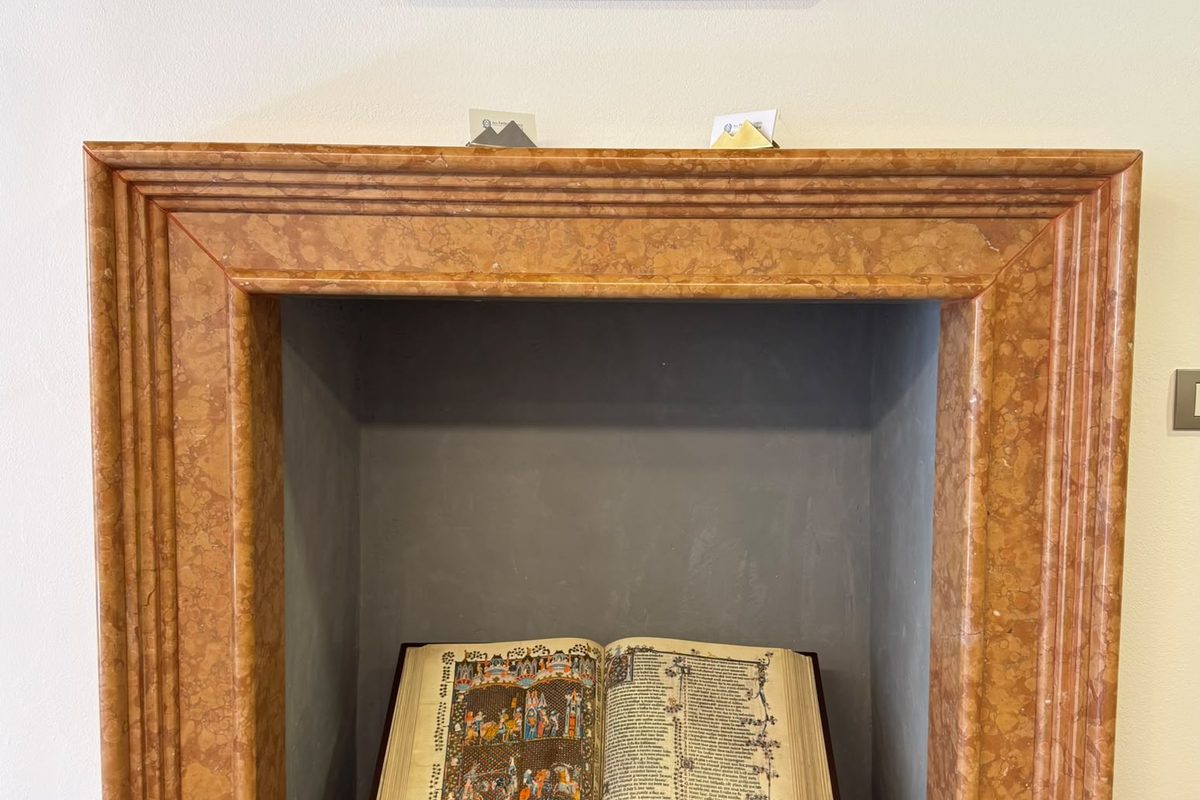
Un volume antico nello studio di Tirano: il notariato italiano conserva atti che attraversano generazioni.
1. I notai esistono solo in Italia?
NO. Il sistema del Notaio di Civil Law quale pubblico ufficiale (altrimenti detto notariato latino) è in vigore in quasi 120 Stati e territori, coprendo circa due terzi della popolazione mondiale.
L’Unione Internazionale del Notariato conta 93 ordinamenti membri.
In Europa, il notariato latino è presente in 22 dei 27 Stati membri dell’Unione Europea. Ne sono invece privi – nel senso del modello latino tradizionale – Cipro, Danimarca, Finlandia, Irlanda e Svezia.
2. Chi è il notaio in Italia? In cosa si differenzia da un "notary public" dei sistemi di Common Law?
In Italia, il notaio è un pubblico ufficiale e un giurista altamente qualificato, con competenze molto più ampie rispetto a quelle di un notary public nei Paesi di common law (come ad esempio Gran Bretagna e Stati Uniti): redige atti pubblici, autentica firme, costituisce società e verbalizza le più importanti delibere e operazioni societarie, redige testamenti, attribuisce pubblica fede agli atti che redige, verifica la legalità degli atti fornendo un ruolo di garanzia giuridica, identifica le parti, ne verifica la capacità giuridica e si accerta che esse comprendano il contenuto dell’atto, conserva gli originali degli atti e ne rilascia copie autentiche, il tutto svolgendo un ruolo centrale nel prevenire le controversie.
Il notaio degli ordinamenti di Common Law si limita ad autenticare firme e non redige contratti complessi, mentre il notaio negli ordinamenti di Civil Law, tra cui l’Italia, redige l’intero atto pubblico.
Il concorso notarile italiano è uno dei più selettivi in assoluto in Europa.
Ci sono circa 300 posti disponibili più o meno ogni due anni, a fronte di migliaia di candidati.
3. È vero che in Gran Bretagna e negli Stati Uniti si compra casa più facilmente perché non c’è una figura equiparabile al notaio italiano?
FALSO. In Inghilterra e Stati Uniti ciascuna parte deve farsi assistere da un avvocato nelle compravendite, raddoppiando i professionisti coinvolti nell’operazione. L’acquirente deve addirittura munirsi di una polizza assicurativa che lo garantisca riguardo alla piena proprietà del venditore, cosa che non succede in Italia, dato che il notaio è uno e imparziale e gli atti che hanno ad oggetto immobili devono essere trascritti nei Registri Immobiliari (inesistenti negli ordinamenti di Common Law).
4. Quanti notai ci sono in Italia?
In tutta Italia ci sono circa 5.200 notai in esercizio.
5. È vero che i soldi che si pagano al notaio restano tutti a lui?
No. È FALSO. La maggior parte dell’importo che viene pagato al notaio è costituita dalle tasse e imposte collegate all’atto stipulato (imposta di registro, imposta ipotecaria, imposta catastale, imposta di bollo ecc.), che nulla hanno a che fare con il compenso del notaio e che quest’ultimo riscuote per conto dello Stato. Tali imposte dovrebbero comunque essere pagate allo Stato per ogni atto o contratto, anche se i notai non esistessero.
Tali imposte sono accreditate dal notaio su un apposito conto corrente separato (c.d. conto corrente “dedicato”) e devono essere versate dal notaio allo Stato nel giro di pochi giorni dalla stipula dell’atto.
6. Per diventare notaio occorre essere figlio o parente di un notaio?
No. FALSO. Circa l’80% dei notai italiani (compresa me) non è figlio, né parente di notaio.
Per diventare notai bisogna superare un rigido e difficilissimo concorso pubblico che si tiene necessariamente solo a Roma, costituito da 3 prove scritte (giornate intere trascorse all’interno dei padiglioni della fiera di Roma per 3 giorni consecutivi, con il controllo della Polizia Penitenziaria) e una prova orale.
7. A chi spetta la scelta del notaio?
Il notaio è, per sua natura, un soggetto indipendente, equidistante ed imparziale e quindi non può essere qualificato come notaio del venditore o notaio dell’acquirente. Di conseguenza la scelta del notaio deve essere sempre condivisa da tutte le parti dell’atto, anche se di solito nella prassi la designazione del notaio viene fatta da colui che ne sostiene i costi.
Esiste un principio generale secondo il quale i costi gravano sul soggetto che ha maggior interesse alla conclusione del contratto; pertanto le spese della compravendita gravano sull’acquirente (art. 1475 c.c.), quelle della donazione sul donatario, quelle della permuta su entrambi i permutanti, quelle della divisione sui condividenti, quelle di costituzione della società sui soci fondatori o sulla stessa società, e così via.
E’ opportuno diffidare dalle insistenti pressioni verso l’uno o l’altro studio notarile da parte di soggetti esterni che intervengono nelle trattative quali consulenti, procacciatori d’affari o altro. Le pressioni di questi soggetti potrebbero essere infatti dovute a interessi personali, assolutamente incompatibili con le caratteristiche di indipendenza e garanzia proprie del notaio.
8. A chi si richiedono le copie degli atti notarili?
Quando il notaio è ancora in esercizio, le copie dei suoi atti notarili sono rilasciate dal notaio stesso anche se cambia la sua sede, purché rimanga nello stesso Distretto notarile.
Quando però il notaio cessa l’attività (ad esempio va in pensione o muore), oppure si trasferisce in altro Distretto, le copie possono essere emesse sempre e solo dall’Archivio Notarile del Distretto ove il notaio operava all’epoca della stipula, anche se nel medesimo studio sono presenti altri notai che erano associati con il notaio cessato.
9. Chi deve dichiarare e garantire la regolarità urbanistica dell’immobile oggetto di vendita?
L’obbligo di rendere le dichiarazioni urbanistiche relative a un fabbricato oggetto di vendita è sempre in capo alla parte alienante (quindi chi cede l’immobile) sotto la propria responsabilità.
Non è compito del Notaio – che non ha ovviamente le competenze tecniche necessarie a tal fine – effettuare accessi agli atti o indagini presso i competenti uffici comunali al fine di accertare la veridicità e la completezza delle dichiarazioni urbanistiche rese dall’alienante.
E’ quindi opportuno che la parte alienante – al fine di rendere in atto una dichiarazione consapevole circa la situazione urbanistica degli immobili e di non incorrere in responsabilità, anche penali, – effettui gli opportuni accertamenti, anche eventualmente presso gli uffici comunali e, se del caso, tramite un tecnico di propria fiducia, che verifichi la regolarità urbanistica dell’immobile oggetto di acquisto.
L’unico obbligo del Notaio sul punto è quello di inserire in atto le menzioni aventi ad oggetto i provvedimenti urbanistici reperiti dalla parte alienante. Tali menzioni sono a pena di nullità, quindi senza di esse l’atto notarile è nullo.
1. Do notaries exist only in Italy?
NO. The Civil Law notary system, in which the notary acts as a public official (also known as the Latin notariat), is in force in almost 120 countries and territories, covering approximately two-thirds of the world’s population.
The International Union of Notaries has 93 member legal systems.
In Europe, the Latin notariat exists in 22 of the 27 Member States of the European Union. The countries that do not have it — in the sense of the traditional Latin model — are Cyprus, Denmark, Finland, Ireland and Sweden.
2. Who is the notary in Italy? How does he/she differ from a “notary public” of Common Law systems?
In Italy, the notary is a public official and a highly qualified legal professional, with powers and responsibilities that are much broader than those of a notary public in Common Law countries (such as, for example, the United Kingdom and the United States).
The Italian notary: drafts public deeds; authenticates signatures; incorporates companies and records the most important corporate resolutions and transactions; drafts wills; grants public faith to the deeds he/she prepares; verifies the legality of deeds, providing a legal guarantee function; identifies the parties, verifies their legal capacity, and ensures that they understand the content of the deed; preserves the originals of deeds and issues certified copies; plays a central role in preventing disputes.
A notary public in Common Law jurisdictions generally limits his/her activity to authenticating signatures and does not draft complex contracts, whereas a notary in Civil Law jurisdictions, including Italy, drafts the entire public deed.
The Italian notarial examination is one of the most difficult and selective professional examinations in Europe.
Approximately 300 positions become available every two years or so, compared with thousands of candidates.
3. Is it true that buying a house is easier in the United Kingdom and the United States because there is no equivalent figure to the Italian notary?
FALSE.
In England and the United States, each party involved in a property transaction must be assisted by a lawyer, thereby increasing the number of professionals involved in the transaction.
Furthermore, the buyer must obtain an insurance policy guaranteeing the validity of the seller’s title to the property, something that does not occur in Italy, because the Italian notary is a single, impartial professional and real estate deeds must be registered in the Land Registers, which do not exist in the same form in Common Law systems.
4. How many notaries are there in Italy?
There are approximately 5,200 practising notaries throughout Italy.
5. Is it true that all the money paid to the notary goes to the notary?
NO. FALSE.
The majority of the amount paid to the notary consists of taxes and duties connected with the deed executed (registration tax, mortgage tax, cadastral tax, stamp duty, etc.).
These amounts have nothing to do with the notary’s professional fee: the notary merely collects them on behalf of the State.
These taxes would have to be paid to the State for every deed or contract even if notaries did not exist.
Such taxes are deposited by the notary into a separate dedicated bank account (the so-called “dedicated account”) and must be paid by the notary to the State within a few days after the execution of the deed.
6. To become a notary, is it necessary to be the son or a relative of a notary?
NO. FALSE.
Approximately 80% of Italian notaries (including myself) are neither children nor relatives of notaries.
To become a notary, candidates must pass a strict and extremely difficult public competitive examination, which is held exclusively in Rome and consists of three written examinations (full days spent inside the halls of the Rome Exhibition Centre for three consecutive days, under the supervision of the Prison Police) and one oral examination.
7. Who chooses the notary?
The notary is an independent, impartial and equidistant professional and therefore cannot be considered the seller’s notary or the buyer’s notary.
Consequently, the choice of the notary must always be agreed upon by all parties to the deed, although in practice the notary is usually selected by the person who bears the related costs.
There is a general principle according to which costs are borne by the party that has the greatest interest in concluding the contract. Therefore, real estate purchase expenses are borne by the buyer (Article 1475 of the Italian Civil Code); donation expenses are borne by the donee; exchange transaction expenses are borne by both parties; partition expenses are borne by all co-owners involved; company incorporation expenses are borne by the founding shareholders or by the company itself; and so on.
It is advisable to be cautious about persistent pressure from external parties involved in negotiations — such as consultants, business brokers or others — to choose one notary rather than another.
Such pressure may in fact be driven by personal interests that are completely incompatible with the independence and guarantee functions that characterise the role of the notary.
8. Who should be asked for copies of notarial deeds?
When the notary is still practising, copies of his/her notarial deeds are issued by the notary himself/herself, even if the notary changes office, provided that he/she remains within the same notarial district.
However, when the notary ceases activity (for example, due to retirement or death), or transfers to another district, copies can only be issued by the Notarial Archives of the district in which the notary was practising at the time the deed was executed.
This remains the case even if other notaries who were associated with the retired or deceased notary continue to operate in the same office.
9. Who must declare and guarantee the urban planning compliance of the property being sold?
The obligation to make Planning and building compliance declarations in notarial deeds concerning a building being sold always lies with the selling party (i.e., the party transferring ownership), under his/her own responsibility.
It is not the notary’s responsibility — who obviously does not have the necessary technical expertise for this purpose — to access municipal records or carry out investigations with the relevant public offices in order to verify the truthfulness and completeness of the urban planning declarations made by the seller.
Therefore, in order to make an informed declaration in the deed regarding the urban planning status of the property and avoid possible liability, including criminal liability, the seller should carry out the necessary checks, including, where appropriate, inquiries with municipal offices and, if necessary, through a trusted technical professional who can verify the urban planning compliance of the property.
The notary’s only obligation in this respect is to include in the deed the references to the urban planning permits and measures provided by the seller.
These references are required under penalty of nullity; therefore, without them, the notarial deed is void.
Hai un dubbio sul tuo atto?
Una domanda posta prima della firma vale molto più di un chiarimento dopo. Scrivimi o chiama lo studio: ti risponderò personalmente.